

In recent years, the education sector in Nigeria has experienced a significant transformation. As more schools turn to technology to enhance their learning environments and streamline administrative tasks, Learning Management Systems (LMS) have become crucial tools. By integrating various school operations, LMS platforms make it easier for educators, administrators, and parents to stay connected and informed. This article delves into the key features of LMS for schools, the benefits they offer, and how Nigerian schools can implement these systems to improve efficiency and student outcomes in 2026.
What is LMS for Schools?
A Learning Management System (LMS) is a digital tool that facilitates the management and delivery of educational content. It integrates various school operations into a single platform, enabling real-time updates on student performance, attendance, and communication among teachers, students, and parents.
Key Features of LMS for Schools
- Student Information System (SIS): Organizes student data, such as grades, performance, and attendance.
- Online Grading System: Teachers can grade assignments and exams digitally, providing students with instant feedback.
- Digital Attendance Tracking: An automated system that eliminates the need for paper-based attendance records, providing real-time data.
- E-learning Platform: Students can access lessons, assignments, and quizzes anytime, promoting flexibility in learning.
- Parent-Teacher Communication Tools: Parent portals allow parents to monitor their children’s academic progress and communicate directly with teachers.
In Nigeria, where many schools still use traditional methods for tracking grades and attendance, implementing an LMS offers an innovative solution to streamline operations.
Core Features of LMS for Schools
1. School Management Software
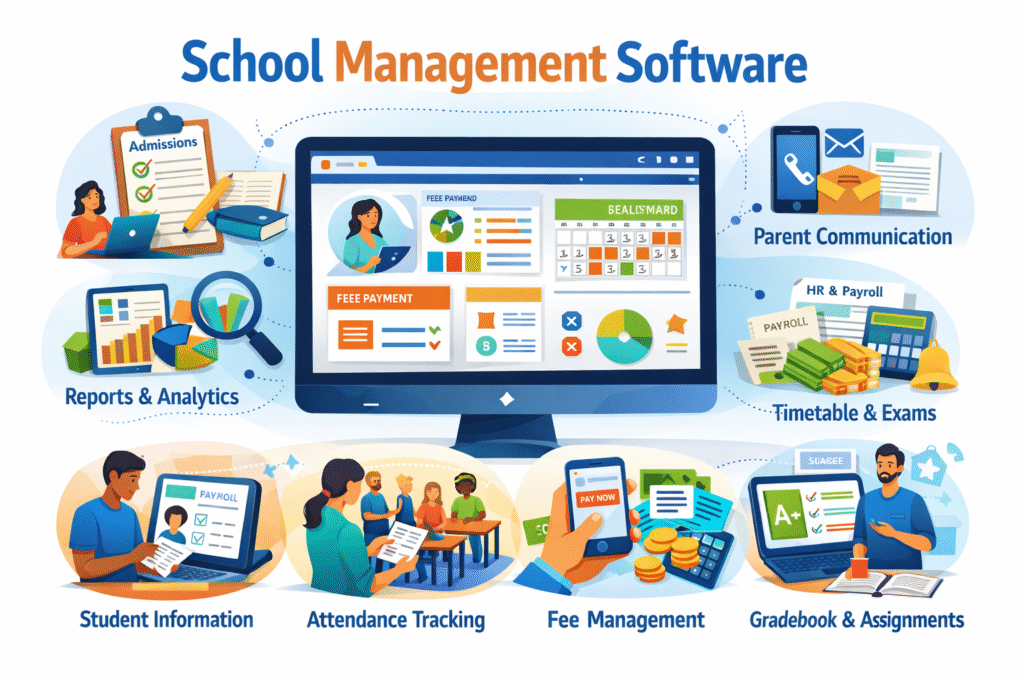
School management software is an essential component of an LMS, providing a comprehensive solution for managing administrative tasks such as student enrollment, attendance, and fee collection. By using a school management system, schools in Nigeria can:
- Automate administrative tasks.
- Track student performance.
- Generate reports on school activities and financial transactions.
For example, Excel Mind’s School Management Software allows administrators to easily monitor fees, enrollments, and staff performance in real time.
2. Digital Attendance Tracking

Tracking attendance manually can be time-consuming and error-prone. By implementing a digital attendance-tracking system, schools can instantly record student attendance, which is crucial for monitoring class participation and ensuring accurate records for reporting.
Benefits of Digital Attendance Tracking:
- Time-saving: Automates attendance marking.
- Accuracy: Reduces human error in data entry.
- Real-time data: Immediate access to attendance reports.
3. Online Grading System
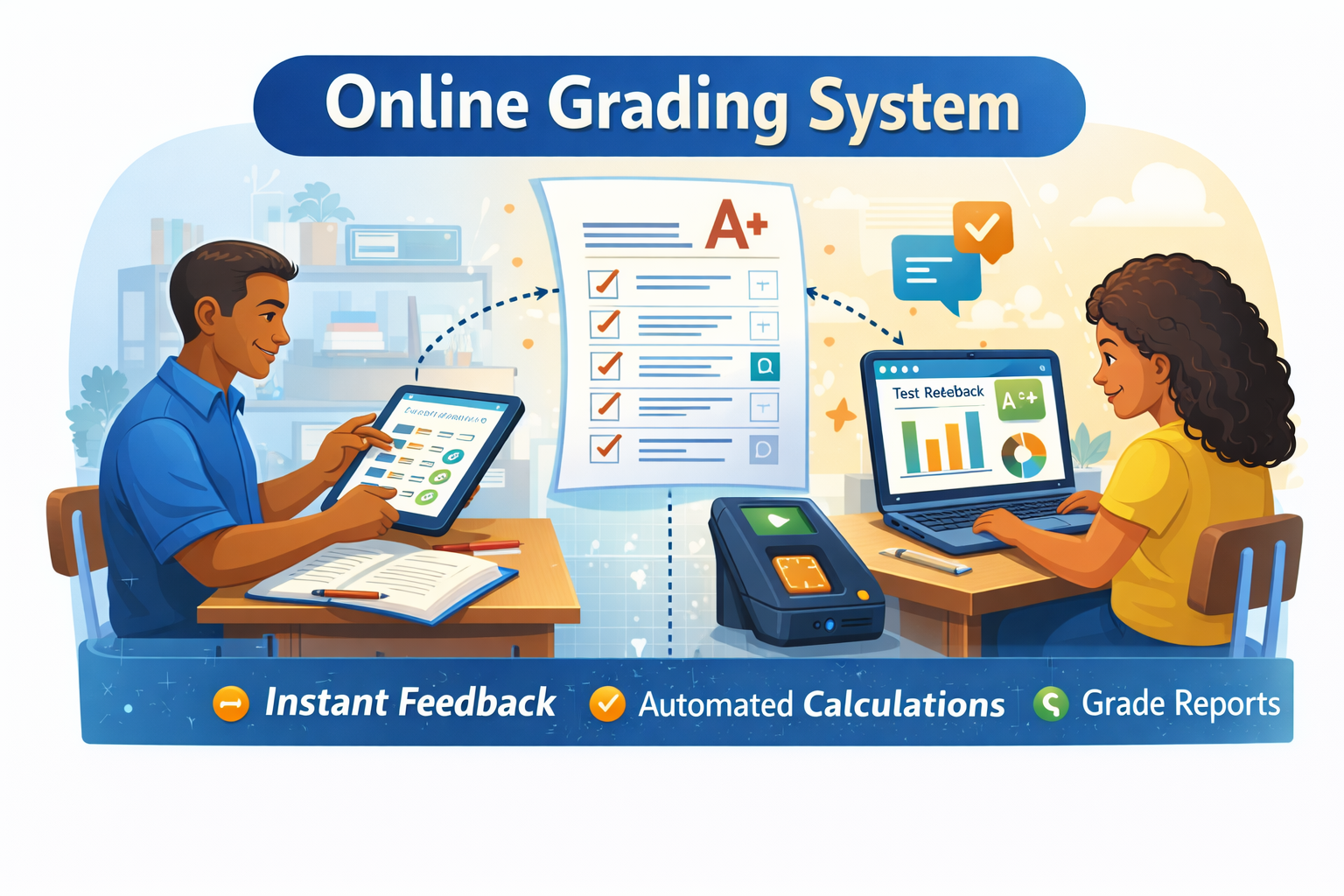
With an online grading system, teachers can grade assignments and exams more efficiently. This feature offers various benefits, including:
- Instant feedback: Students receive immediate results, helping them improve quickly.
- Automated calculations: The system automatically calculates scores and generates grade reports, reducing administrative burden.
4. E-Learning Platforms

E-learning platforms are an integral part of modern education. These platforms allow students to access learning materials online, participate in discussions, and complete assignments at their own pace. The flexibility provided by e-learning platforms is particularly beneficial in today’s hybrid learning environment, where some students may be learning remotely.
Key Benefits:
- Anytime, anywhere learning: Students can access content from any location with an internet connection.
- Interactive learning: Includes videos, quizzes, and assignments to engage students.
- Customizable content: Teachers can create personalized lessons tailored to their students’ needs.
The Benefits of Using LMS for Schools in Nigeria
1. Improved Efficiency in School Operations
LMS platforms simplify and automate several school processes, such as attendance tracking, grade management, and communication. This reduces the administrative workload, allowing staff to focus on more critical tasks, such as student engagement and curriculum development.
For instance, Excel Mind’s school management system automates tasks like fee payment reminders, grade reporting, and attendance tracking, making school administration more efficient.
2. Enhanced Student Engagement
LMS platforms encourage students to take ownership of their learning. With features such as interactive assignments, discussion forums, and video lectures, an LMS provides a more engaging learning experience than traditional teaching methods.
3. Seamless Communication
Effective communication is key to improving the learning experience. An LMS enables real-time communication between teachers, students, and parents. For example, parents can check their child’s progress via a parent portal, while teachers can provide instant feedback on assignments.
Excel Mind’s real-time notifications and messaging system provides continuous updates, ensuring all stakeholders are informed and engaged.
4. Better Data Management and Analytics
With an LMS, schools can generate detailed reports and insights into student performance, attendance, and academic trends. This data-driven approach allows educators and administrators to make informed decisions and improve overall school management.
For example, Excel Mind’s Data Dashboards provide clear insights into school performance, finances, and engagement, enabling administrators to track key metrics such as student progress and attendance trends.
How to Implement LMS in Schools
1. Choose the Right LMS for Your School
When selecting an LMS, it’s important to choose one that meets your school’s specific needs. Consider factors like ease of use, scalability, features, and integration with other systems. Excel Mind’s LMS, for instance, integrates seamlessly with school management software, providing an all-in-one solution for school administrators.
2. Train Teachers and Staff
Effective implementation of an LMS requires that teachers and staff are properly trained on how to use the system. This includes training on setting up courses, grading assignments, and communicating with students and parents.
3. Ensure Strong Internet Connectivity
For LMS to function effectively, schools need a stable internet connection. Schools in Nigeria, especially in remote areas, may face challenges with internet connectivity. It’s crucial to choose an LMS that works well in low-bandwidth environments, like Excel Mind, which offers offline capabilities.
4. Continuously Monitor and Improve
Once the LMS is implemented, it’s important to monitor its performance continuously. Regularly assess how well the system is functioning, gather feedback from teachers and students, and make necessary improvements.
LMS Pricing for Schools in 2026
As schools move toward digital transformation, the cost of implementing an LMS is a common concern. Pricing for school management systems can vary based on features, school size, and student count.
Excel Mind’s LMS offers flexible pricing options that cater to the needs of Nigerian schools. Schools can try a free demo to evaluate whether the platform meets their needs before committing to a subscription.
Conclusion
The integration of an LMS in Nigerian schools is no longer a luxury but a necessity in 2026. By streamlining operations, engaging students, and providing valuable data insights, LMS platforms are transforming how education is delivered in Nigeria. Whether you’re an educator, school administrator, or parent, an LMS like Excel Mind’s School Management System offers the tools needed to enhance the learning experience and improve school management efficiency.
Key Takeaways:
- LMS platforms improve efficiency by automating tasks like attendance and grading.
- Student engagement is enhanced through interactive e-learning features.
- Real-time communication ensures parents, teachers, and students stay informed.
- Data-driven insights help improve school management and student performance.
Try Excel Mind’s school management software today to streamline your school’s operations and improve learning outcomes.
FAQs
What is a school management system?
A school management system is a software solution that manages various administrative tasks in schools, including student enrollment, attendance, grading, and communication among teachers, students, and parents.
How does school management software work?
School management software integrates all aspects of school operations into one platform. It enables the management of student data, academic performance, attendance, and financial transactions in real time.
Why do Nigerian schools need digital management systems?
Digital management systems streamline school operations, enhance communication, and provide real-time data on student performance, which is crucial for effective school management in today’s digital age.
Which is the best school ERP software in Nigeria?
Excel Mind’s School Management System is one of the best ERP software solutions for Nigerian schools. It offers a wide range of features, including digital attendance tracking, grade management, and real-time communication tools.
Related Articles: